
Tibetan customs and habits of the Tibetan festivals data and characteristics of the clothing
The TibetanCustoms and habitsTibetan festivals data and characteristics of the clothing
Has a long history of Tibetan, the Tibetan ancestors' since ancient living in on both sides of the yarlung zangbo river middle reaches.According to archaeological discoveries, as early as 4000 years ago, the Tibetan ancestors thrive in the yarlung zangbo river valley.According to Chinese history records, Tibetan belongs to a han western qiang people.Western qiang was pleasant area the department has close political and economic ties, with the han and Tibet has "qiang" read bod (hair, in dialect), "tang Mao" and so on, and qinghai existing contacts.
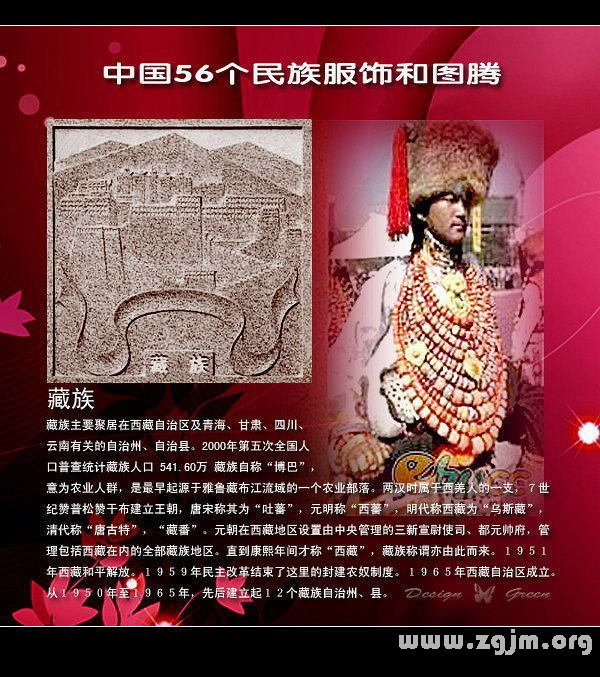
The Tibetan language
Tibetans have their own language and characters.Tibetan language belong to sino-tibetan hidden myanmar language Tibetan, divided into Tibet, kang, amdo three dialect.According to the current Tibetan is 7 century ancient Sanskrit and the western regions of pinyin text text.The use of Tibetan Tibetan and strengthened the motherland in the central plains economic ties.
The 10th century to the 16th century, Tibetan culture is thriving.Hundreds of years, Tibetan culture.Structure of grand, relate the world's longest epic "king gesar", for centuries, has been in Tibet and Tibetan areas of qinghai, gansu, sichuan, yunnan.And the world-famous kangyur, "Dan bead" two series of Buddhism, as well as about rhythm, literature, philosophy, history, astronomy, calendar calculation, such as medicine monographs.
The Tibetan people's favorite white, this with their living environment, customs and habits have a close relationship.Day wish grassland around is surrounded by snow mountains, a silvery white, the ground of the sheep and yaks, and drink the milk, felt hat, wearing fur jacket, wearing also is white.So the Tibetan people regard white as the ideal, good fortune, a symbol of victory and prosperity.
The Tibetan diet
Most Tibetan three square meals a solar eclipse, but in every four meal or a solar eclipse the intensity of labor is larger, five, six food habits.The vast majority of tibetans to zanba (Chinese: chow mein) is the staple food, fry the highland barley is ground into a fine powder.Especially in pastoral areas, in addition to zanba, rarely eat other food products.Eat zanba, want to mix on strong tea or tea with milk, butter, milk residue, serve it with sugar and so on;Zanba convenient for storage and easy to carry, when eating very convenient also.In Tibetan areas, anywhere visible body with sheepskin zanba pocket, hungry can eat at any time.
Tibetan past few edible vegetables, fusi mainly cattle, sheep, pork.Sichuan, yunnan and other places of Tibetan will be used to make pork pig fat, more easy to save.Meat stored multi-purpose air drying method.In winter after the slaughter of cattle, sheep can not eat, can cut into strips, hung in a ventilated place, make it dry.Winter to make dried meat as well as anti-corrosion, and can make blood frozen in flesh, to maintain a fresh color of dried meat.
One of the most common ghee derived from cattle, sheep, in addition to the meal used ghee, also used to produce large amounts of tea.Bumps and milk yogurt, cheese, milk residue often produced dairy products, such as serve as a snack, or other food.
In the Tibetan folk, both men and women, old or young, the tea as a must drink, moreover also drink milk.Tea and milk tea with tea stewing eight.Tea contains vitamins and theophylline, eight can complement vitamin deficiency due to less to eat vegetables, help digestion.Tibetans generally like to drink made of highland barley barley wine.In the holiday or festival day.
The Tibetan ChuiCan cookware.In Tibetan areas, every family has ghee tea canister, milk tea pot.In most of the tibetans are dry cow dung as fuel, stove for iron triangle.Tibetan tea utensils, wine, or used in yunnan copper.Tibetan pastoral areas are affixed with a refined Tibetan dao, is mainly used to cut food, is also used to slaughter a sheep, peeled, cut counting-house jue son, such as labor, production has a long history of Tibetan dao, exquisite workmanship.
Typical food: the typical Tibetan food besides zanba, barley wine, tea, there are a lot of, for example: foot rice, Tibetan traditional banquet food, boil with foot, rice, oil, etc.Black pudding, Tibetan traditional dishes, made from cow blood (sheep) as the main raw material.Cheese, Tibetan traditional dishes, made from cow, goat's milk after fermentation.Tea is the Tibetan people daily drink.Generally the Tibetan people need to drink a few cups of tea in the morning, to go to work or work.To the Tibetan people home, usually get tea hospitality.
Tibetan tea drink, also has a set of rules.Generally is more over coffee, not a drink, but to the guest's cup is always full;If you don't want to drink, don't touch it;If drank half, can't drink anymore, master of tea in the cup, full guest a pendulum, and gulp to leave again, this is Tibetan eating habits.
Tibetan religious practices
Tibetan faith in mahayana Buddhism.Mahayana Buddhism absorbed Tibetan indigenous religion teach some of the rituals and content, form with Tibetan color "Tibetan Buddhism".For Tibetan living Buddha monks as guru, Tibetan language called lama, Tibetan Buddhism is also known as lamaism.The seventh century, Buddhism from India to Tibet has been 1300 years of history.In the 13th to the 16th century, the growing popularity of Buddhism, buddhist activity is frequent, BuddhismtempleAcross Tibet.The temples of the famous ganden monastery, drepung, sera and tashilhunpo monastery and the potala palace.
Major sects of Tibetan Buddhism: after the 10th century, along with the Tibetan Buddhism "hong" period after the start, gradually appeared many denominations, early have nyingma pie (commonly known as "Mongolian lamaism), sakya (commonly known as" teaching "), honk when sent (commonly known as "black teach"), the kagyu sect (commonly known as "white"), etc.Early in the 15th century, the religious reforms in tsongkhapa created the gelug sect (commonly known as "yellow").In addition, Tibetan Buddhism and some independent sect has: school, solution pie, yu sent, sleep sac, profile plunge into pie, Xia Lupa, etc.
Tibetan national holiday
Holiday revolving around mountains
Revolving around mountains is Tibetan traditional festival, also known as mu FoJie, worship the god.Popular in ganzi and aba Tibetan area.On April 8th birthday lunar calendar, there are Kowloon leaf water for bathing, so it is also called mu FoJie.Every year this day, ganzi autonomy system is people dressed in national costumes, gathered to the monkey mountain and fold the river.People go to the temple burning incense to pray, burning paper money.Then revolving around mountains to god, pray for god bless.Revolving around mountains, the tent for a picnic, Tibetan opera.Sing folk songs, dance heishui dance, a string, riders monkey also for archery.In the meantime, people also have to hold material exchange activities and other cultural and sports activities.
CaiHuaJie
CaiHuaJie is zhouqu county Po valley area Tibetan traditional festival.Lunar calendar in early May 5, the feast for two days.Legend has it that long ago Po valley is a unfrequented valley, people make a living by gathering and hunting, with leaves and animal skins to make clothes.One day, came a call from a far country lotus cheese girl, her beauty docile, ingenuity, and teach the local people forest farm and weaving sewed, lily also to cure for people.One may fifth day, lotus flowers, cheese up the hill by nickel wind volume under the cliff fall dead.People sad, and went up into the mountain flowers on this day to commemorate her.Over time, formed the CaiHuaJie.
Huang TibetanNew Year's Day
According to Tibetan New Year for "lothar.Tibetan New Year long for the field with wheat ripe for the beginning or the beginning, is in the fall.According to records, before 100 BC, Tibetan have their own calendar, it is calculated according to the round of the moon day, month and year.In the 7th century, the tang dynasty, chengdu, sung Kim, the two married princess successively into Tibet, the mainland's calendar.Since then, the Tibetan ancient calendar and Chinese calendar, combining the Hindu calendar, to the yuan dynasty formed the air-dried, gan, five lines, as one of the unique calendar.Issachar is about 13th century yuan dynasty dynasty as the Tibetan into New Year beginning January 1, today.
Tibetan festivals is various, one of the most grand, most of the whole nation significance for Tibetan New Year.Tibetan New Year is equivalent to the han nationalityThe Spring FestivalThat is the biggest festival in a year.Starting from the Tibetan in mid-december, people are ready to Chinese New Year eat, wear, use of festive supplies.Tens of thousands of farmers and herdsmen in Lhasa city, to buy necessities.This is the busiest season of the year in Lhasa.
Tibetan New Year starts with the Tibetan December 29.
Tibetan New Year's eve is a very busy day.
Tibetan junior, is in the wee hours auspicious "folding ga in rap."The Tibetan people's congress on the first day will come to a "rob water game", each household to a young man to the river, the well's mouth or tap "rob," said the head under the water., according to the traditional Tibetan Tibetan junior who grabbed the first bucket of water, is the "liquid gold", the second buckets of water known as "silver water", portends a lucky, lucky, bonanza.When the sun rises, people dress up the pecking order has been finished a few holiday foods.At that time, the neighbors will be door-to-door, respect - side, high recite along the spread already a long time "zha-xi-de-le loose measures", "Emma palmer ZhuoGongKang mulberry said" good fortune, health, happiness and peace remarks.Since then, the whole family will be closed together.On the first day, many buddhist farmers and herdsmen to the jokhang temple in Lhasa for pilgrimage, pray for peace, health in the New Year.
Relatives and friends in the annual lunar calendar, activities make streets busy rise, also become a fashion moment, show the New Year is full of "lothar (New Year) zha-xi-de-le!"The soul.but about beats.
Annual activity in grade 3 is given priority to with religious content, style, turn by the way, and the roof pervaded the thick smoke, young man on the roof and the top of the mountain colorful prayer, blessing to rid the disaster, and the vast number of new pastoral areas will also hold the horse packsaddle ceremony, horse racing, tug-of-war, throwing and so on a variety of entertainment activities.Tibetan New Year's celebrations on January 15th will continue to the Tibetan.
Tibetan peasant in the New Year
Since January in Tibetan, tsang (Tibet's breadbasket, mainly refers to xigaze area) will begin spring planting farmers, so which one area of the Tibetan ancestors long ago put on December 1, every Tibetan Tibetan peasant in the New Year.
The custom of the Tibetan farmhouse years only commonly in shigatse area, including the wood county, Tibet Lhasa and most parts of Tibet, is in the Tibetan New Year on January 1 every year.
Tibetan festivals is various, and Tibetan farmers around New Year's day is one the most grand, the festival of national significance.Since Tibetan in mid-november, people began to prepare for New Year's day when eat, wear, use of festive supplies.
Although the real peasant is the Tibetan New Year on December 1, but holiday festival activities from Tibetan began on November 29th.From that night "ancient turkestan" family reunions, Tibetan farmhouse officially kicked off a series of happy New Year activities.Tibetan peasant in the New Year celebrations and other parts of Tibet Tibetan New Year activities are basically the same, its activity will continue to the Tibetan the fifteenth day of the joy.
Mr Kagyu dawa festival
April 15th is washed dawa festival, of the tibetans.About it, there are two: one is to commemorate Buddha into day;A memorial day princess wencheng to reach Lhasa.The day around Tibet are going to have a religious observance.Tibetan people in yunnan some weixi county mountain worship of dharma, but also to have "go now" (around) the ceremony.
sections
Wenxian county in gansu Tibetan, fourth, fifth lunar calendar may, is the "big".During the festival, accompanied by his brother, the girls wear bright clothes, bring a delicious cuisine, the mountain tea plucking song, and the young man to propose a toast to each other, QiZhu auspicious.
Ongkor festival
"The ongkor festival" (field) is one of Tibetan traditional festivals in Tibet.The feast for one to three days.Every year in July, the grain harvest in sight, tibetans will turn back the books around the field, I wish a good harvest.At the same time hold the horse racing, archery, performances and other activities.
sholton
Sholton is Tibetan traditional festival, originated in the 11th century.Tibetan held on 1 July each year, for four or five days.Snow was the Tibetan transliteration, which means "yogurt feast", then sholton is interpreted as drink yogurt festival.Later gradually evolved into a predominantly in Tibetan opera, also called "Tibetan opera festival".Nearby residents of Lhasa, dressed in bright costumes, could, drink and talk, singing and dancing, watch the Tibetan opera, enjoy the joy of the holiday.Each afternoon began to string curtain.Host a toast to the line to three guests "loose quasi nie tower" (the rites), a variety of different tunes vomiting-inducing toasts singing.Song, guests will be three drink wine.Toast, soul.but about beats the laughter prolongs.When the sunset dyed red sky, it was in the twilight from norbulingka.According to Buddhism, becoming a monk monk banned in a period of time to go out.In the summer, Tibetan expires at the end of June, the monk temple mountain, secular people in yogurt for alms.Pure religious activities at that time.
The middle of the 17th century, the qing dynasty after the dalai lama and four officially conferring the v panchen lama, Tibet around the famous Tibetan opera group focus to Lhasa for sholton and sholton activities became is given priority to with Tibetan opera performance, the combination of religious and cultural activities important festivals, so it is also called "Tibetan opera festival", because its scope limitation both inside and outside the temple, and drepung centered, so called "zhe clam sholton.The early 18th century, from drepung to norbulingka sholton activity center, allowing citizens to watch Tibetan opera in the park.
After the democratic reform in Tibet, the sholton and become people's own holiday.During the holiday season with zhe clam tan Buddha, Tibetan opera performances, stroll Lin card and other activities.Every year on June 30, the Tibetan, the western suburbs of Lhasa, the drepung held a grand exhibition "Buddha" activities, let more believers have the opportunity to worship the Buddha, the local government on the buddhist activities without intervention.During the festival, the norbulingka, people mountain people sea, between the trees with tents, mat, Tibetan people gathered here to drink barley wine, tea, eating yogurt, and watch the Tibetan opera and appreciate a variety of entertainment programs.
In 1993, the people's government decided to Lhasa, since 1993, held annually in Lhasa sholton, trade show at Lhasa sholton materials at the same time.On August 16, 1993, opened the first "snow SEC".Sholton and now has developed into a literary performance, economic and trade negotiation, investment promotion and capital introduction, material exchange, product exhibition, sports, tourism and leisure is a body comprehensive festival.
Decided to Lhasa in 2004, the people's government, in order to solve the traditional sholton and will be subject to Tibetan, every year in the Gregorian calendar date, inconvenience for tourists at home and abroad, since 2004, except for the drepung Buddha ceremony is still in the traditional Tibetan June 30 x rijin, hosted by the city government sholton and fixed to the Gregorian calendar every year on August 18, the opening.
Actors perform in the potala palace square celebrate the sholton Tibetan opera.
White day after day
Tibetan October 15 is the annual Tibetan traditional festival - white with future, namely "lucky tianmu festival".
About the origin of the festival, the Tibetan folk have a vivid legend: the patron saint of the jokhang temple mother Marceau jem has three daughters, the younger white pull association, second daughter DongZan jem, big white raza's daughter.Because they don't obey, mother was made to curse, wish her life may not be her husband, even if it does, it can only meet once a year.Curse may achieve, white raza's lover live in Lhasa river south red man praise, a year only in October 15, Tibetan meet each other again.
To celebrate the "tien festival", the women in this day grooming, deliberately to white raza, tianmu as incense before prayer.Old Tibet, both rich and poor, to the younger generation, monks,The childThe handouts to custom, the children in this day is the happiest, early in the morning to the parents to be "white day after" holiday allowance.
From October 14th night Tibetan, worship white raza, believers in an endless stream, many temple have to tianmu hadad tribute, the temple monks of the jokhang temple held a grand routine annual sacrifice and timing for the mandala great sacrifices, and the white raza's tianmu, like facing the southern bank of Lhasa river red and red rush toward to the cases of the statue of facing north, said meet two phase.
Tibetan customs and habits of the Tibetan festivals information and dress characteristic related content:
- The habits and customs of the miao miao festival information and clothing characteristics
- Tujia customs information and dress characteristic tujia festivals
- The customs of yi yi holiday information and clothing characteristics
- The habits and customs of the Mongolian Mongolian festival information and clothing characteristics
- Tibetan customs and habits of the Tibetan festivals data and characteristics of the clothing
- The custom of the buyi buyi holiday information and characteristics of the clothing
- Yao yao nationality customs and traditions of the holiday information and characteristics of the clothing
- The Korean customs Korean festival information and clothing characteristics