
Do you know anything about India's caste system
What is a caste system?
Caste system (English: the Caste system in India, and India Custer system), as a social system is common in India and other south Asian region.
With brahman caste system as the center, divided into many based on the professional group of endogamy, or caste.Various surname is in accordance with the different and divided into many times caste, caste within these times again according to the settlement by different into many settlements caste, the settlements of x line caste and then divided into different marriage clan, so layers clasp, integrated into a set of social systems spread throughout the Indian subcontinent.Caste system covers, therefore, the vast majority of social group, and with India's social system, cosmology, religion is closely related to interpersonal relationships, is India's most important traditional social system and the specification.In general, the caste system is considered to be the top 20 century or so, founded with the Aryan invasion of Indian social system.However, with the mamou leave grams, until your foreign islamic conquerors ruled India, caste system to regime need to experience many adjustment, and the need to conform to the colonists in the period of the British India, and are fixed, rigid, become a class of sequence system.Because the inequality in the system and the emergence of a modern western ideas of democracy and human rights today, therefore has often been criticized for the modernization of the backward system, is even being viewed as obstruction of India's social progress.
After independence from colonial system in India in 1947, the legal status of caste system formally abolished, various caste discrimination and classification is considered illegal, but in the practical social work and life, it still plays a important role.
What is the caste?
"Caste" (caste, or translated into castle) a words derive from Latin castus, originally "pure", and in SpanishgrapesSpanish-speaking castas were performed, namely "race", British law as seen in the 16th century, the English will be cast as the same meaning.15 th-century Portuguese after establishing trade stronghold in India, first of all, the words used in the system, "is often used to call the lowliest of each class, with high class owners have differentiation".Along with the western society's interest in the system, is gradually widely used, the word sense also appear to change.In Britain and France, caste, called caste, its until after the 18th century, and in the early 19th century evolved into a common vocabulary.But in the 19th century ago, the British will often "caste" and "tribes" both confused, and the system and val that confusion, the cognitive all along with the British colonial India.In India, and the corresponding vocabulary, which is the "community" and "community", also with the meaning of "species", namely the settlement, settlement should be system group and division of each other (like the nature of the relationship between different organisms) implications, this has to do with castas caste refers to "tribes" or "race" meaning is not the same.From the above content, the "caste" (in this case caste) mainly comes from the western rather than the concept of India, so the lexical meanings often reaction of western culture on India's main views.
Today, "caste" not only refers to the Indian caste system, but refers to "a community with strict system of the society to distinguish".In other words, western culture to emphasize the system of "isolation" and "inequality" oriented, and by extension the various negative point of view.Anthropologist Louis dumont argues that this view of my race center doctrine mainly comes from the spirit of freedom and equality emphasized by modern individualism, and the tradition of the European nobility and the church that the result of two class conflict each other.
The semantic of "caste" in Chinese
The word "caste" originally "clan" meaning, then with the Buddhism was introduced into China, sometimes diversion to call it.However, well into the nineteenth century, introduces "castes" or the Chinese translation of "caste".Then, in the case of Chinese words appear garbled world: "caste" can meanThe HinduAs described in classic "Verna" (i.e., the val), are also used to which the operation of actual life "J ā ti" (that is, the caste system).This confusion and lack of deep understanding of Indian society, causing frequent confuse "val" with the actual situation of caste system.In order to avoid the chaos of the situation above, some scholars adopted according to the pronunciation of "caste" "castle" the new translation, trying to replace traditionally used the word "caste", but still not as good as the latter generally use degrees., on the other hand, by western point of view as well as the modern Indian nationalism, social public of caste system generally rigid, backward oppression and highly negative impression, so "caste system" in daily life usually has a negative meaning, sometimes as described a system implemented in inappropriate derogatory term.
What is a val?
That (Varna, or Verna) is the classification of the explanation in the classical Hindu caste system architecture, its connotation is mainly found in the code of manu and "qu haze (English: Gotama) such as early brahminism classic.The original intention is "color" or "class", in the theory mainly refers to four different classes, according to some principles in the classic distinction between four classes, and the mutual obligations and rights clear specification, however, in actual society caste is not divided according to the theory of specification, therefore the val and caste system can not be equated.Even so, Mr That theory was applied in the actual society, as many caste uplift status of means, so still have its effect on the explanation and rationality.
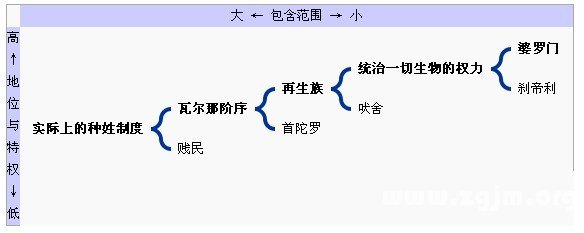
The order sequence/caste sort
Brahman is the primeval mouth, kshatriya is primeval arms, barking is the primitive man's thigh and sudra is human feet.As for the untouchables, was left out of human body.
Early brahman's classic deliberately ignore the untouchables, argues that all castes divided into four anwar, and with four colors, respectively.The four DE the same headed by brahman, by function and the division of rights norms, constitute a rigorous order sequence:
Brahman (Brahmins/Brahmans) : the highest val of it, was the core, for the entire order sequence generation is white.Brahman priests, monks, is according to the stipulations of the code of manu, professor can be engaged in the vedas, priests and accept offer these three work, but after the 8th century gradually, the priest clean and replace the former, become the most important characteristics of brahman.In addition, the brahmin enjoy many privileges, such as do not punish, need not pay tax, do not kill, confiscation of can get back part of the lost property, etc.
Kshatriya (Kshtriyas) : inferior the val, the blessed one book says it has Shared with brahman "under the jurisdiction of the rights of all living things", said is red.Kshatriya warriors and princes, rulers, grasp the actual political and military power, but was left out in the complete process of priests, so do not have the power of the religious.In addition, the responsible for the protection of brahman.
Barking up (Vaisyas) : the third anwar that, such as generation is yellow.Bark is a farmer or shepherd (common) and task is to produce food, and provide a variety of offerings."Qu haze" regulation barking up can be engaged in agriculture, business, animal husbandry and lending.
Sudra (Sudras) : the lowest anwar, generation said is black.Sudra is not the slave of the personal freedom, to provide various services.
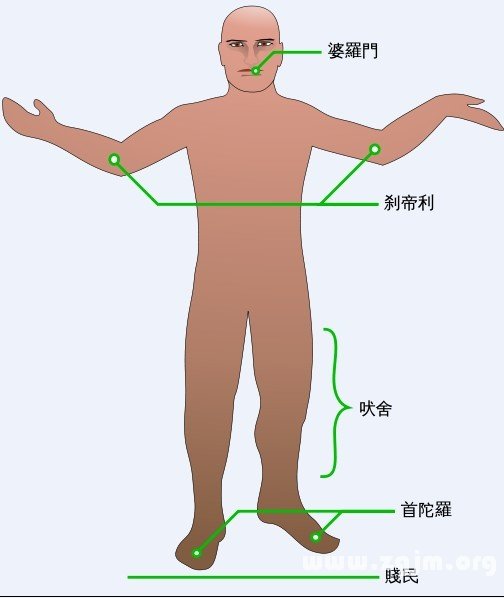
What is India's dalits (dalit) caste?
Untouchable excluded from four castes (val it), India's dalits (Dalit, Untouchable English translation), much by criminals, prison or inter-caste marriages and their descendants.Because their identity from generation to generation, not affected by education, do not wear shoes, and almost no social status, only be allowed to work in the very low, such as clean filth or funeral.Because "untouchable" is seen as a contact, so it is forbidden to touch four anwar that other pariah body, untouchable footprints are clear smooth, even the shadow can not overlap, and tarnishing others.
Do you know India's caste system related content:
- Three major Hindu god
- One of three major Hindu god Vishnu (Vishnu)
- Hinduism: Ms. Pal (Parvati)
- Hinduism: dry Ta shiva (brahman gandlmva)
- India's "Monkey King" : god monkey Hanuman Hanuman
- India's wisdom book - know the bhagavad gita's first book
- Interpretation of the Indian epic "mahabharata"
- "Mahabharata" a wonderful story