
India sadhu how to practice as a sex means self purification
Penance and sex
In vedic times, religious sacrifice rites dominated, and by the upanishads era, people's passion for sacrifices to slowly decline, asceticism gradually become the main form of religious practices, ascetic instead of the priests, as the main body of religion, a great god shiva master also became a penance.Worship is a collective activity, asceticism is more performance for the behavior of the individual, rather than sacrifice, asceticism is more convenient and it is generally accepted.
Ascetic original objective is to have power, in order to get the power, there are quite a few ascetic quite a little greenery, they lived in mountains, voluntary endure hunger, thirst, mosquito, cold, others in suburban plains revelled in penance: sitting under the sun, at the same time with the heat focal roast himself, or lying in made of thorns or nail bed, or hangs upside down in the branches up for several hours.But most ascetic and no moves towards such harsh extremes, they are more in the aspect of spirit and the will to meditation.Some live in the suburbs or in a village alone, some are under the guidance of an elderly living in a cottage cottage, collective practice.Some are to travel fakir, are often people together, and to one who is willing to listen to sermons, anytime and anywhere or debate with his rival.Some are naked, some dressed in very simple clothes.
If sacrifices are people pray for the gift of god, pray asceticism, on the other hand, is no longer a passive, and more performance for the thirst for knowledge and wisdom and possession, their physical and mental suffers infinite joy always together, as a result, asceticism is a kind of mysticism.Unlike vedic times optimistic spirit, upanishads era, especially to the prosperous era of Buddhism and jainism, India in the combined with asceticism and mysticism of pessimism: to the world, there are deep anxiety about life, this is the age of social revolution took place in the, but with China and other forms of civilization in the world is different, it does not show the bloody confrontation and military conquest, and more performance for the conflict and clash of ideas.Moreover, also don't like the Chinese sage and Hebrew prophets, ancient Indian seers don't consider others or the whole national salvation, they think that in the era of decline is an impossible to achieve the purpose of, but the austerity of self or practice could make people get rescued.Obviously, this is a fundamental, radical individualism.Ancient India's overall political, economic, and social structure for religious services, but all the religions and for personal services, before is the social system of the country, ahead of the social system is a person, as long as individual can strive to be saved in the best possible way, so, everyone be saved at the same time, the whole world is saved.Indian culture while showing a huge range, but there is a consistency in terms of the following enlightenment: there are more important than material view of values;Material prosperity and the concentration of political power is not in a country or a personal decisions;Ancient indians are most passionate about is the personal liberation, into the modern, also can say that they have been in the pursuit of self discovery and the realization of personal value.In spite of the pursuit and find yourself on the way may be conflict or the opposite, but the root of the Indian thought is real individualism.
Perhaps it is because this kind of individualism, making India culture is various and sometimes is obvious mutual fusion opposing things happened again.As penance, asceticism was supposed to abstain from lust, but strangely, penance and sex in ancient India and often together.
We speak of from the original meaning of penance.In the rig Veda, asceticism (tapas) means "warm" or "heat" or "heat", the ancient indians believe that the world is due to the heat and the birth, austerities later take the word is, in fact with the original meaning of the word is more or less some contact, asceticism behavior in appearance is the suffering of the flesh, but the heart is happy, happy;In other words, through asceticism and agglomeration of energy in the body (shown as "hot" or "warm") to get some kind of supernatural power, so in the late vedic literature, gain strength from austerity becoming the key factor of penance.It is in order to obtain the power to take the fast, fast, silent and other forms of penance.
But in the later of shiva sects and tantra there, penance and is closely connected with sex together: asceticism and sex is considered to be two kinds of forms, of one's own heat penance from potentially destroy force produced by itself or the fire of creativity, and sex is through the combination of Yin and Yang forces and energy generation.The wide upanishad Lin said:"A womanIs fire, the root is her fuel, vagina is flame;When a man through her body, she gets vigor, her fans crazy is the spark of her."It is through such sex flame, shakti sects and tantra to practice together with sex, think that sex like original universe creativity sacred flame itself.It is through Yin and Yang harmony and the creation of the universe, to cultivate ourselves to really achievement can only through the combination of men and women, so, sex with tantra there becomes a main means of practice.This practice is not the satisfaction of desire or the desire of anger, but the desire of the sublimation process, it through the way of sex and to inhibition and conquest of their own desires, so that the people in spiritual purification, therefore, sex is a kind of inward, the embodiment of the self purifying power, rather than outward, the pursuit of the process to the unknown domain, at this point, it is in keeping with asceticism to focus on their own agglomeration.
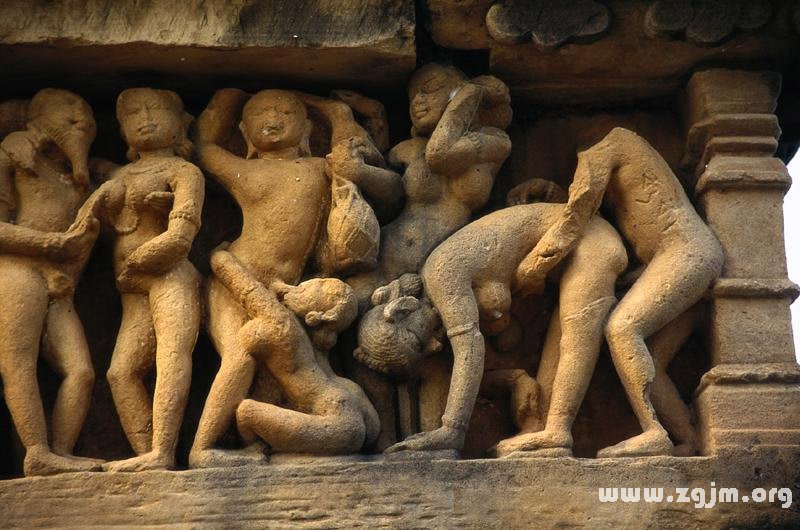
India, for a long time la jolla temple sculpture of sex
Asceticism, wisdom and youth
At the end of the vedic era, great changes have taken place in Indian society, according to the theory of manu method etcThe HinduBooks, people all his life in practice, the practice is described as four stages of life.First is also called brahman tzu chi students career stage, students to the teacher homeHave a class, similar to the Chinese school system.Around twenty years old, students complete student career back home, entered the stage of due diligence that occupy the home, at this stage, he will take part in the equivalent of religious bath bar mitzvah, become a bath, after himTo get marriedMarried and have children.Marriage has three purposes: based on the family life, promote the development of religious society;Numerous children, their families;Enjoy sex.The third stage called Lin in the practice stage.The fourth stage is the real monks practice stage, he should abandon everything, asceticism to travel.The four stages represent different realm of life: purified themselves constantly, and make oneself gradually get rid of the bondage of the world, won the highest level.
According to "manu law theory, the gray-haired, grandchildren, she should go into the forest to home doing penance.Others alms and wild fruit for a living, he should be to increase their own suffering: "in the summer, he should be exposed to the sun;On a rainy day, he should live in the open;In the winter, he should be wearing wet clothes."Before death, he should abandon his fixed place in the forest, with a crutch, bowl and a little coarse clothes go wandering:
He can't eager to death,
Also can't eager to live,
Just waiting for the hour,
Just like a servant waiting for money...
No matter what people became angry at him,
He is not angry.
He should bless them that curse him...
He can't say any lies.
Clinging to the spirit and peace of mind,
Wholeheartedly, abstain from any sense of enjoyment,
As the only depend on oneself,
To live in this world desire for eternal blessing.
In the eyes of our Chinese people to the elderly should enjoy family happiness, but from the perspective of individual liberation in ancient India, think people at the end of the elderly, can get rid of the ruts and real practice.In old age in fact it's hard to go to bear such a hard life in order to obtain relief, this is just the ideal of ancient India, envisioned, in this kind of ideal, the old man became the embodiment of asceticism spirit completely.In the middle ages, the Islam culture especially the Persian poet Samuel omar khayyam ideas, painting and literature in medieval India appeared an even more strange phenomenon: the combination of youth and the wisdom to become the highest ideal.
In this kind of ideal, the old man became the symbol and embodiment of wisdom, while young girl represents the youth and beauty, the youth young girl snuggled up beside the white-haired old man become a poet and painter heart to high to the realm of beauty.In India in the creation of contemporary writers, we can still find traces the influence of this idea, for example, the writer Anita desai's novels are often shaped by psychological features some inner loneliness disturbing images of women, their misfortune does not show the life difficult, and more performance for some puzzling psychological desire, "where are we going this summer" noted that women, in her own life's boring and monotonous often made her feel annoyed, once, she saw an old man in the park with a young woman sitting close together, it left a deep impression on her, she repeatedly on the scene, from love to what she was trying to pursue the dreamy artistic conception - wisdom and the combination of youth, the old man gentle hand to touch the white woman body, it is about more than desai's best wishes woman thought.The combination with the ancient Indian culture more or less the sacred and strange mystery.
The flavor of food and color.
Meditation, all human lives are closely associated with sex, in fact this is the vedas and the root cause of the upanishads also talk about sex.In the upanishads philosophers view, the universe in its all aspects are also the spirit of sex.Respect for elders is faith and loyalty of affection, is characterized by friendship between peers and like-minded feelings, for the weak or the suffering of people is the feeling of compassion and kindness, maternal love and father love is caring, kind and sacrifice.All these feelings are based on the person's sex, as a result, the wide upanishad Lin said, temperament is man, that is to say, the feeling of people because sex.
Early buddhist classic "miscellaneous, including" believes that all living beings, are due to food storage.There are four "feed" meaning, known as the four food.First of all, the food, at this point, it not only refers to the usual food, and is linked to features of the desire: good, good, good smell, nice, and so on.Second, is the touch, it is more related to "by" people in the world to all kinds of things in contact, constantly stimulated, so we have a variety of desire, "" can not only for fun, also can show the bitter;Third, is the heart, "heart" to be linked to love and comfort,Fourth, is the general, "knowledge" is described as depends on the experience of color, from appetite tastes to lust, our physical life experience is in constant pain or pleasure.Color the word by the "color" (meaning "matter", refers to the human body) combined with "name" (refers to the person's perception or feeling ability) and compound word, consisting of the equivalent of sentient beings.
Relying on four food, all sentient beings to survive, the root of the four food or origin condition lies in the person of love, and will further lead to lust.Someone asked the Buddha, the pain is self-inflicted. Unfortunately, or others?Is the conjunction of themselves and others, or neither themselves rather than others cause spontaneous or say was predestined?Buddha denied all of these reasons, said suffering and joy are born to karma: "by the edge of love, love, and to find edge, edge choice, choice intention and greed, intention, greed greed, greed was taken by, was taken by the affair, affair edge guard."
In the famous "fire law", the Buddha told all the monks said: "all things are on fire....Why on earth and burn?For the fire of passion, the fire of resentment, for instance, the fire;For incarnation, twilight, death, sorrow, sorrow, pain, regret, despair and burning."Commandment in the full text in the fire, the fire is not only desire, is also a person to save itself refining of fire,No man can be free, but in the Buddha's view, people want to liberation, can only do away all the time in your life.However, people often indulge in all sorts of desires, it is difficult to away."Fire" of Buddhism fable story, the house is on fire, the children are playing in the room, his father want to let the children have to leave the house, children who was oblivious to what danger, determined to leave, father had to coax children, they said there was more fun outside, children are the only glad to followed him as he ran from the room.
The Buddha on the meaning of life to discuss the great influence on later generations, Schopenhauer, Nietzsche until foucault these thinkers are very attention to this problem.Schopenhauer by India's ancient culture, especially the upanishads and the impregnation of buddhist thought, he is also from the Angle of the desire to know the meaning of life: "the foundation of all desires is need, defects, also is pain, so people always is painful, he is the essence of the hand of the heart in pain.If, on the other hand, because he is easy to get satisfaction immediately eliminated the things which he can to lack the object of desire, so terrible emptiness and boredom would attack him, which is said that man's existence and survival itself will become his unbearable heavy burden.So, life is like a pendulum swinging back and forth between pain and boredom.Both painful and boring in fact is the life of two kinds of the final composition."Schopenhauer was a pessimistic philosopher, he thinks that everyone is "blind", by the blind desire or the will of the traction and walk around.
Schopenhauer thought influence directly the Nietzsche, and Nietzsche cynical, he thinks he's is the "age of the most despicable person," they are "final", what is love?Create what is?What is desire?"The last" incomprehension.Nietzsche's thought directly inspired foucault, michel foucault's life are trying to process a great nietzschean approach: "I how to live?What should I learn from life?How do I become today the me?Why should I suffer for doing this I?"He for problem is especially interested in sex, because sex is actually one of the most direct expression of desire, and western society are often on the problem to avoid or to convert it to another question: "so many centuries, in our society, the sex with the pursuit of truth what is wired together clues...In our society, why is not a simple reproduction of race, family and personal approach?Why it's not just the means for obtaining happiness and enjoy?Why is in is considered to be our most 'profound truth hiding places and profession?"India's ancient culture, in fact, have also been discussed these problems, people associated with sexual desire problem has always been a people want to understand but difficult to understand the eternal topic of forever.
Don't refuse any woman
"Brahmana" assertion, compiling the early vedic literature is for the specific implementation, or overlaying certain rituals.This statement is not completely false, but justified.What people in vedic times don't infatuated with the pure poetry, their poems are mostly witchcraft poetry, its core is the desire, this kind of poetry is to sing, and may be associated with this or that kind of ceremony, it was later vedic rituals of the underlying soil, natural development of the vedic sacrifices is primitive witchcraft.
Fete ceremony was originally as a means of the early vedic people's production activities or auxiliary method.According to ancient vedic religion, sacrifice ritual process of program and sex is often engaged in staggered together: separate women's legs, there is not only the source of happiness, and is a symbol of prosperity."Hundred brahmana", "he's brahmana", "guang Lin upanishad, the singer upanishad symbolically or publicly emphasize the importance of sex.
Below is the singer upanishad second chapter 13 "hymns of female day" :
A summons ─ ─ it's section and caleb (refers to hum, prelude songs).
He made request ─ ─ it's more than a quarter bross shiva (paean to guide the child sex.
Lie with the woman and ─ ─ it's section wu gizo (said song loudly, to be sung).
He slept in the woman body ─ ─ this is section the broad carry great ROM (refers to the song or waka, response duet or chorus).
He ended the ─ ─ that's section, that (the end, the reflections).
He did all huan and ─ ─ it's a festival, then.
This is the woman a cyclotron day paean to huan will place.
He know women day paean to wiggle in huan will place, a then a, every sex is merry and happy auspicious, happiness as immense as the Eastern Sea to live as long as the southern mountain, grandchildren, livestock full bar, fame with the world.A person should never refuse any woman, that's the rules.
Here, xing luo, bross shiva, wu gizo is the five day songs such as the names of the five paragraphs, is on different stages of the sexual rituals with different vedic hymns.The singer upanishad said: "people are the elements of language.The elements of language is the poem.Hymns are the elements of the tune.Are the elements of melody singing."For the vedic age, no language is not poem, no poetry is not a song, their language has a very obvious rhythm and a lively lively tune.Tone in the language, the beat is that kind of music, is so important for expression, so into a song, its tone of the words used most has been stipulated in the law of nature.Their language is a rhythm and rhyme, so their language is poetry, songs, and their singing is almost always accompanied by some body movements, in order to strengthen the rhythm, and gives illusion to reality.So they themselves are magic and spells.Poetry, dance, and music is in a state of the original complex.As a result, it is not hard to imagine, "female day anthem" and its ceremony although description is sex scenes, but no any indecent, on the contrary, its music and dance, and the corresponding atmosphere will can lead us to the elegant luxury of mental state, is a wonderful art enjoyment.
In the upanishads thinker, a song is always in order to achieve the purpose of a desire, a singer, but is a desire to seek, to achieve some kind of desire is singing the embody the essence of their ancestors.Beliefs about the desire of the ancient ritual, the later tantra ritual of sex has great influence, it is also popular in medieval Bangladesh's bound (vratas) culture foundation of sacrificial ceremony.Bound, is a kind of folk rituals, color with the season, generally held by the women folk.Bound, is the core of desire.Cluster around it is a rhyme, lingo, song, dance, and so on, all of these are to show desire as if has achieved, such as o · Tagore (Abanindranath Tagore) says: "a bound, is more a desire.We saw it in painting;You can listen to it in the echo of the lyrics in the melody, you can see it in the theater and dance response;Anyhow, bound, but more is the desire to sing, draw desires."Obviously, it is neither the prayer, is not a sin.It's not prostrate in front of the gods to beg for the grace of god, but by certain actions, especially sex ceremony said the realization of desire.
However, the singer upanishad of soul "hymn" also is not the most important meaning of it's ancient sexual rituals, but some thought-provoking and at the same time also makes the later philosophers and saints mystery: "a person should never refuse any woman, that's the rules."Simply, we can say that in the era of the upanishads, how much material wealth is measured by how many of the animals, love or sex is to imagine will help to get rich, help the material the behavior of the harvest, therefore, a person should never refuse any a woman.But the upanishads often looks be like simple, actually to hide the profound significance of the occult, this is the so-called "how's sense of honor," the singer upanishad hall, huang land described having paean to ceremony, and in the end with that sentence to points out the essential of the ceremony, it shows that this sentence in addition to the above general, there are more profound meaning.Therefore, this sentence caused the later scholars have guessed.Shankara, said the meaning of this sentence is: a man should not be refused to come to his bedside is full of desire of woman;His slave, noting that which the wife of the others and the desire for sexTo make loveIs a part of the worship of Lord shiva, adultery is not banned.
For ancient books mentioned or descriptions to all kinds of good or bad sex custom, we can understand, because sex involves in People's Daily lives, understand sex is understand life.The hymns of soul, but linked with adultery custom also seems to be a bit unusual.What is the meaning, it seems to be a mystery, but mystery is the meaning of let's to reflect some problems.
Don't refuse to woman, Mr Zhu huotempleSculpture, the 10th century.
India sadhu how to practice as a sex means self purification relevant content:
- Three major Hindu god
- One of three major Hindu god Vishnu (Vishnu)
- Hinduism: Ms. Pal (Parvati)
- Hinduism: dry Ta shiva (brahman gandlmva)
- India's "Monkey King" : god monkey Hanuman Hanuman
- India's wisdom book - know the bhagavad gita's first book
- Interpretation of the Indian epic "mahabharata"
- "Mahabharata" a wonderful story